Columbia Valley Short Term Rental Association
Supporting local owners, visitor choice, community confidence, and a thriving Columbia Valley tourism economy.
Columbia Valley Short Term Rental Association
Supporting local owners, visitor choice, community confidence, and a thriving Columbia Valley tourism economy.
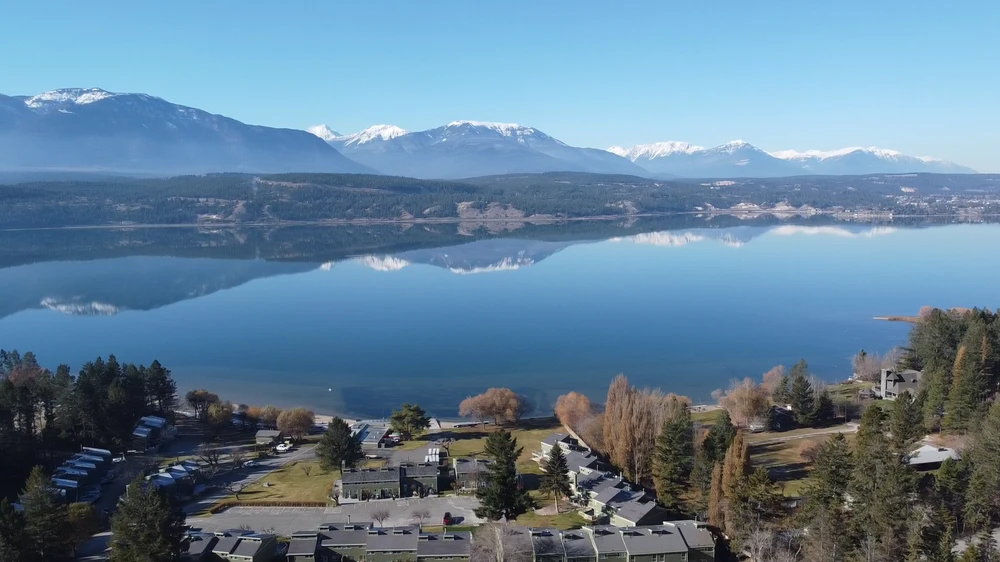
A United Voice for Columbia Valley Short-Term Rental Owners
The Columbia Valley Short-Term Rental Association exists to represent and advocate for the interests of short-term rental owners and operators within the Columbia Valley region, promote responsible operations, support tourism and economic development, and provide a unified voice in matters affecting the short-term rental industry.
Short-term rentals strengthen the Columbia Valley.
In 2025, short-term rentals turned 167,223 guests into $107.1M of economic activity across Invermere, Windermere, Fairmont Hot Springs, Panorama, Radium Hot Springs, and the wider valley — supporting local businesses, seasonal employment, and the recreation economy that defines the region.
Community Wide STR Benefits
Short-term rentals generated $107.1M in local economic activity.
The Columbia Valley is a recreation-based, second-home, seasonal visitor economy. Short-term rentals accommodate families, golf groups, ski travellers, wedding guests, hot springs visitors, remote workers, and returning seasonal residents who often need full homes, kitchens, multiple bedrooms, parking, laundry, pet flexibility, and space that traditional hotel rooms cannot always provide.
These guests do not just pay for lodging. They buy groceries, gas, restaurant meals, coffee, ski passes, golf rounds, marina services, hot springs visits, retail goods, and local experiences. In 2025, that activity added up across the valley.
In a tourism economy, accommodation is not separate from the community. It is the front door to restaurants, shops, trades, recreation, and local jobs.
STR FAQs
Clear answers based on the data.
Are STRs an expected form of accommodation in the region?
Yes. In the RDEK short-term rental survey, 57.4% of respondents said STRs are a form of tourism accommodation the public expects in their area. This reflects changing travel behaviour, especially for families, groups, ski travellers, lake visitors, and guests who prefer a home-style stay.
Do guests generally have positive STR experiences?
Yes. Only 3.1% of respondents who had stayed in an STR within the RDEK described the experience as negative.
Do hosts generally report positive STR experiences?
Yes. Among respondents who had listed their property as a short-term rental, 98.2% described their experience renting the property as positive.
Would every STR become long-term housing if STRs were restricted?
No. Only 7.9% of STR operators said the space would have been rented to a long-term resident if it had not been rented short-term.
Why do visitors choose STRs instead of hotels?
STRs provide full-home amenities such as kitchens, multiple bedrooms, laundry, parking, outdoor space, pet flexibility, and shared gathering areas. These features are especially important for families, multi-generational trips, sports groups, wedding groups, ski trips, longer stays, and guests visiting communities with limited hotel capacity.
STR Regulations
STRs already operate within a structured regulatory environment.
The Columbia Valley STR environment is not unregulated. Operators must navigate local zoning, business licensing, safety documentation, provincial registration, parking standards, guest limits, strata rules where applicable, and Temporary Use Permit requirements in areas where STRs are not otherwise permitted.
Economic Evidence
How a single booking reaches the whole valley.
The economic case for short-term rentals follows a direct chain: accommodation enables visitation, and visitation drives local spending. In a recreation-driven valley, that spending supports far more than hosts. It reaches cleaners, contractors, trades, restaurants, shops, activity providers, tourism operators, maintenance teams, landscapers, snow-removal businesses, and hospitality workers.
Step 1 — The activity base
Every figure is built up from listing-level activity recorded by AirDNA across 1,034 active listings in seven communities over the 2025 calendar year. Net revenue is the accommodation fare plus cleaning fees retained at the listing level.
Step 2 — What guests pay for accommodation
The platform service fee is applied to net revenue. PST and GST apply to the full net-plus-service-fee subtotal. The Municipal and Regional District Tax applies to the same subtotal except for Canal Flats, where MRDT is not applied.
Total accommodation spend is 1.34× net revenue ($36,169,863 ÷ $27,003,295).
Step 3 — The spending that leaves the property
Airbnb’s British Columbia economic data finds that for every $100 guests spend on accommodation, they spend $196 on other goods, services, and restaurants. That ratio is applied to total accommodation spend to size guest spending in the wider economy.
Where the money goes
Of the $107,062,794 total footprint, $36,169,863 (34%) is the accommodation outlay and $70,892,931 (66%) is guest spending in the wider local economy. Two-thirds of every visitor dollar therefore lands beyond the rental itself. Half of the ancillary spending — $35,446,466 (50% × $70,892,931) — falls in the immediate neighbourhood surrounding the rental.
What each guest contributes
Per-guest and per-night figures divide each total by the 167,223 guests and 668,894 guest nights recorded in 2025.
Activity by community
Net rental revenue earned at the listing level, by community, in 2025.
Future Outlook
Visitor demand is tied to the valley’s long-term growth.
Recreational property owners are among the most significant prospects for new resident and investment attraction in the Columbia Valley. Short-term rentals are part of this pattern: people visit, spend locally, build familiarity with the community, return seasonally, invest, and sometimes transition into longer-term residents or business owners.
The future of the Columbia Valley depends on preserving the features that make the region attractive: recreation, clean communities, family travel, lake access, mountain experiences, responsible property ownership, and a strong base of small local businesses. STRs support that ecosystem by creating flexible accommodation capacity where and when demand exists.
Compliance
Responsible STRs are licensed, documented, and accountable.
The compliance picture is clear: responsible STR operation includes licensing, safety, parking, occupancy control, fire planning, local contact readiness, provincial registration, tax collection where applicable, and respect for strata or community rules. These requirements separate accountable operators from poor operators and create a safer, more predictable visitor accommodation market.
The data does not show a reason to treat responsible STRs as a community threat. It shows a reason to recognize them as part of the visitor economy.
Short-term rentals strengthen the Columbia Valley.
In 2025, short-term rentals turned 167,223 guests into $107.1M of economic activity across Invermere, Windermere, Fairmont Hot Springs, Panorama, Radium Hot Springs, and the wider valley — supporting local businesses, seasonal employment, and the recreation economy that defines the region.
Community Wide STR Benefits
Short-term rentals generated $107.1M in local economic activity.
The Columbia Valley is a recreation-based, second-home, seasonal visitor economy. Short-term rentals accommodate families, golf groups, ski travellers, wedding guests, hot springs visitors, remote workers, and returning seasonal residents who often need full homes, kitchens, multiple bedrooms, parking, laundry, pet flexibility, and space that traditional hotel rooms cannot always provide.
These guests do not just pay for lodging. They buy groceries, gas, restaurant meals, coffee, ski passes, golf rounds, marina services, hot springs visits, retail goods, and local experiences. In 2025, that activity added up across the valley.
In a tourism economy, accommodation is not separate from the community. It is the front door to restaurants, shops, trades, recreation, and local jobs.
STR FAQs
Clear answers based on the data.
Are STRs an expected form of accommodation in the region?
Yes. In the RDEK short-term rental survey, 57.4% of respondents said STRs are a form of tourism accommodation the public expects in their area. This reflects changing travel behaviour, especially for families, groups, ski travellers, lake visitors, and guests who prefer a home-style stay.
Do guests generally have positive STR experiences?
Yes. Only 3.1% of respondents who had stayed in an STR within the RDEK described the experience as negative.
Do hosts generally report positive STR experiences?
Yes. Among respondents who had listed their property as a short-term rental, 98.2% described their experience renting the property as positive.
Would every STR become long-term housing if STRs were restricted?
No. Only 7.9% of STR operators said the space would have been rented to a long-term resident if it had not been rented short-term.
Why do visitors choose STRs instead of hotels?
STRs provide full-home amenities such as kitchens, multiple bedrooms, laundry, parking, outdoor space, pet flexibility, and shared gathering areas. These features are especially important for families, multi-generational trips, sports groups, wedding groups, ski trips, longer stays, and guests visiting communities with limited hotel capacity.
STR Regulations
STRs already operate within a structured regulatory environment.
The Columbia Valley STR environment is not unregulated. Operators must navigate local zoning, business licensing, safety documentation, provincial registration, parking standards, guest limits, strata rules where applicable, and Temporary Use Permit requirements in areas where STRs are not otherwise permitted.
Economic Evidence
How a single booking reaches the whole valley.
The economic case for short-term rentals follows a direct chain: accommodation enables visitation, and visitation drives local spending. In a recreation-driven valley, that spending supports far more than hosts. It reaches cleaners, contractors, trades, restaurants, shops, activity providers, tourism operators, maintenance teams, landscapers, snow-removal businesses, and hospitality workers.
Step 1 — The activity base
Every figure is built up from listing-level activity recorded by AirDNA across 1,034 active listings in seven communities over the 2025 calendar year. Net revenue is the accommodation fare plus cleaning fees retained at the listing level.
Step 2 — What guests pay for accommodation
The platform service fee is applied to net revenue. PST and GST apply to the full net-plus-service-fee subtotal. The Municipal and Regional District Tax applies to the same subtotal except for Canal Flats, where MRDT is not applied.
Total accommodation spend is 1.34× net revenue ($36,169,863 ÷ $27,003,295).
Step 3 — The spending that leaves the property
Airbnb’s British Columbia economic data finds that for every $100 guests spend on accommodation, they spend $196 on other goods, services, and restaurants. That ratio is applied to total accommodation spend to size guest spending in the wider economy.
Where the money goes
Of the $107,062,794 total footprint, $36,169,863 (34%) is the accommodation outlay and $70,892,931 (66%) is guest spending in the wider local economy. Two-thirds of every visitor dollar therefore lands beyond the rental itself. Half of the ancillary spending — $35,446,466 (50% × $70,892,931) — falls in the immediate neighbourhood surrounding the rental.
What each guest contributes
Per-guest and per-night figures divide each total by the 167,223 guests and 668,894 guest nights recorded in 2025.
Activity by community
Net rental revenue earned at the listing level, by community, in 2025.
Future Outlook
Visitor demand is tied to the valley’s long-term growth.
Recreational property owners are among the most significant prospects for new resident and investment attraction in the Columbia Valley. Short-term rentals are part of this pattern: people visit, spend locally, build familiarity with the community, return seasonally, invest, and sometimes transition into longer-term residents or business owners.
The future of the Columbia Valley depends on preserving the features that make the region attractive: recreation, clean communities, family travel, lake access, mountain experiences, responsible property ownership, and a strong base of small local businesses. STRs support that ecosystem by creating flexible accommodation capacity where and when demand exists.
Compliance
Responsible STRs are licensed, documented, and accountable.
The compliance picture is clear: responsible STR operation includes licensing, safety, parking, occupancy control, fire planning, local contact readiness, provincial registration, tax collection where applicable, and respect for strata or community rules. These requirements separate accountable operators from poor operators and create a safer, more predictable visitor accommodation market.
The data does not show a reason to treat responsible STRs as a community threat. It shows a reason to recognize them as part of the visitor economy.
Our Mission
To support a responsible, sustainable, and locally beneficial accommodation industry that strengthens the Columbia Valley economy, protects community character, and promotes fair, practical, evidence-based policy.
Support local business
Provide high-quality experiences for both visitors and residents

Empower growth and prosperity in the local economy
Join the Columbia Valley Short Term Rental Association Today.
Empower growth and prosperity in the local economy
Join the Columbia Valley Short Term Rental Association Today.